
Reviewed · PLAYA DEL CARMEN CENOTE TOURS
Tulum : Dos Ojos cenote 2 scuba dives (certified divers)
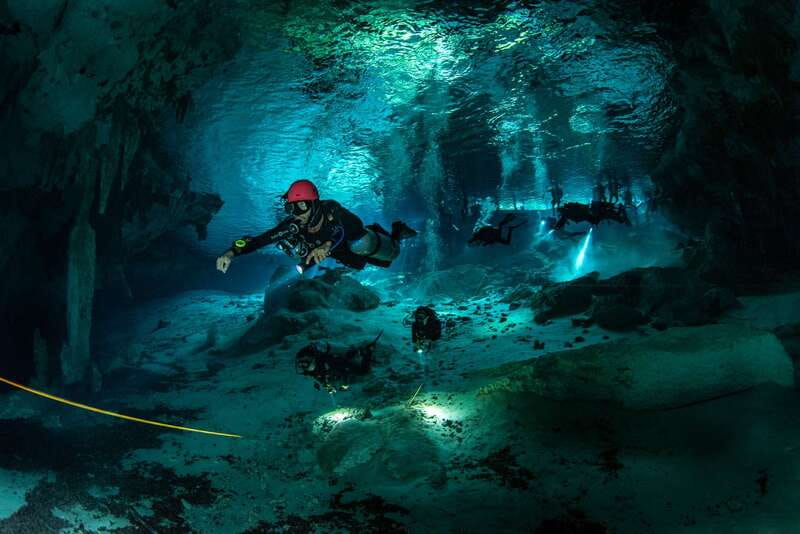
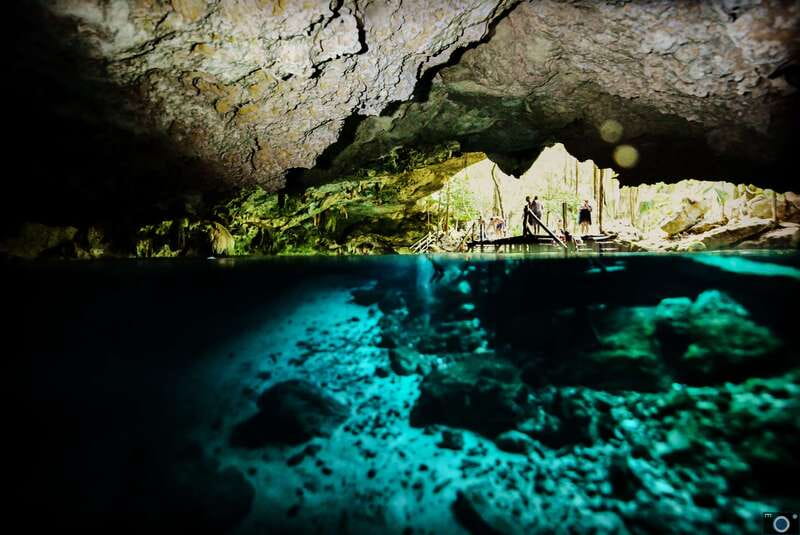
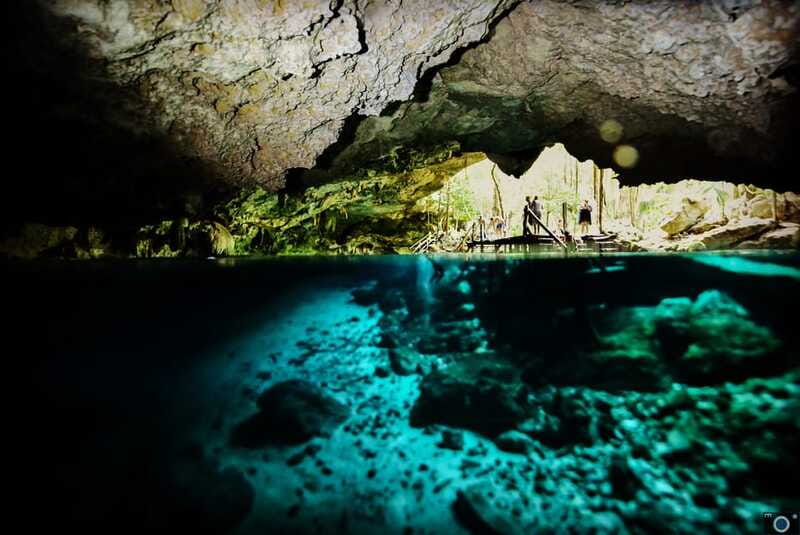
The first thing to know about Dos Ojos is that this is not an ordinary pool with a few rocks at the bottom. You move through a clear limestone cavern, surrounded by stalactites, stalagmites, and shafts of natural light. It feels quiet, strange, and almost otherworldly.
I like the chance to do two different 40-minute sessions in one half-day, and I like the small groups, limited to four participants. Your guide can keep a close eye on everyone instead of trying to manage a crowd. The main consideration is physical: you must carry your tank down 15 steps to reach the water.
Key points to know before booking
- Two 40-minute scuba sessions: You get a proper morning or afternoon of underwater time, with a 15-minute surface break between sessions.
- Open Water certification accepted: You do not need advanced certification, but you must bring proof of certification.
- Small groups of four: The limited group size allows close supervision and a more personal pace.
- Cavern setting with natural light: The route stays near exits, air holes, and visible daylight rather than entering a fully enclosed cave.
- Equipment provided: Scuba gear, lights, and 5 mm wetsuits are included.
- Ruby and Marcos have guided recent outings: Their names are useful to know if you want to ask for a particular guide when booking, though guide assignment is not guaranteed.
Why Dos Ojos feels unlike a normal scuba session
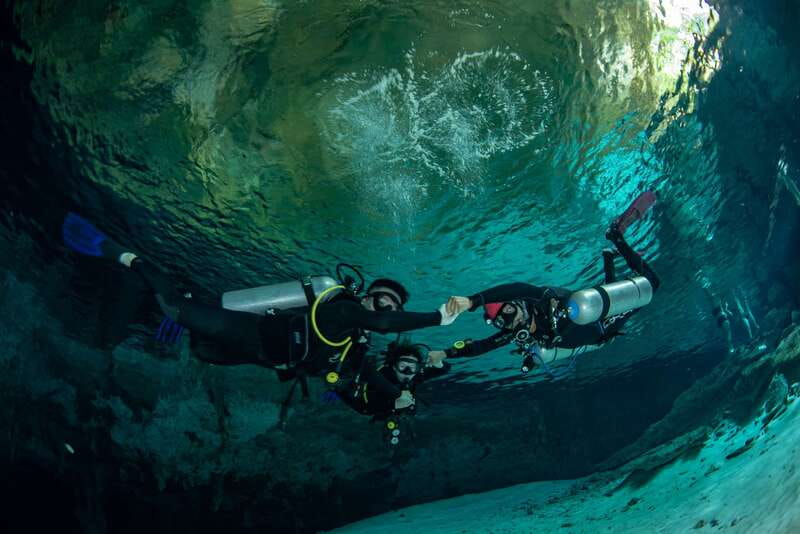
A cenote is a water-filled limestone cavern, formed over a long period as groundwater moved through the rock. At Dos Ojos, the water is famously clear, and the rock formations give the place its character. You are not simply looking at fish over a reef. You are moving through a natural chamber shaped by water, stone, and time.
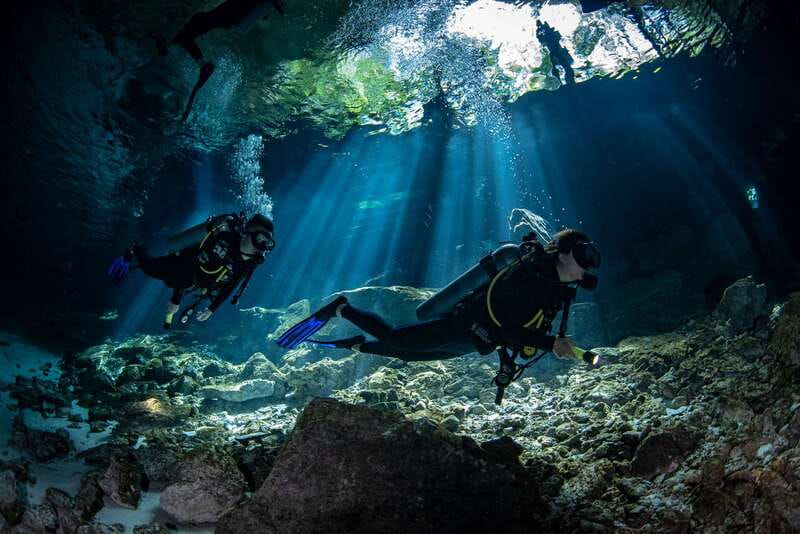
The light matters. This is a cavern experience, not a fully enclosed cave route, so you keep visual contact with natural light. That makes a major difference if you are certified but have never tried overhead environments before. The setting feels dramatic without requiring the same level of commitment as a technical cave expedition.
The formations are the main event. Look for pointed stalactites hanging from above and stalagmites rising from below. Depending on the exact route and conditions, you might also see fossils, old bone formations, native animal species, and a halocline, the point where fresh and salt water meet and create a visible change in the water.
The water can look almost too clear to be real. That clarity is one reason this experience works so well for photography. One recent participant specifically praised the blue water and came away with photographs worth showing off to friends. Bring realistic expectations, though. The quality of photographs depends on your camera, light, buoyancy, and the guide’s ability to position you safely.
More Cenote Tours in Tulum
- Chichen Itza, Cenote and Valladolid Small Group Day Trip
★ 5.0 · 2,104 reviews - Tulum Guided Tour, Magical Cenote, Lagoon Snorkeling and Beachside Lunch
★ 5.0 · 1,888 reviews - Tulum Ruins, Turtles in Akumal and Cenote tour
★ 5.0 · 1,706 reviews
Starting at La Calypso Dive Center
Your day begins at La Calypso Dive Center in Tulum. The center is on the main avenue, in a small cabin set in a wide tropical garden with a stone wall.
The directions are specific. If you are coming from the north, turn right at the traffic light in front of Pollos El Pechugon and Kahlua bar restaurant. At the corner with Second Street on your right, look for the center in the garden. The GPS coordinates are 20.212396, -87.462935.
This is an important detail because hotel pickup is not included. You need to reach the center yourself, and you should allow enough time to find it without rushing. Transportation from the center to Dos Ojos and back is included, so once you arrive, the operator handles the cenote transfer.
Your instructor may speak French, Spanish, or English. The company has used guides named Ruby and Marcos. Ruby was described as accommodating, funny, and personable, and even pointed a participant toward a good taco spot afterward. Marcos was praised for explaining the cenotes clearly and making the outing comfortable. Those personal touches matter on a technical activity, where good communication is more important than flashy sales talk.
What the 5.5-hour schedule looks like
The full experience lasts about five and a half hours. That includes meeting at the center, preparing equipment, transportation, two underwater sessions, the surface break, and the return trip.
At Dos Ojos, each session lasts about 40 minutes. That gives you roughly 80 minutes in the water, which is a solid amount for a half-day outing. The schedule also includes a 15-minute break between sessions. Use that time to rest, drink water if you brought some, and listen carefully to your guide’s instructions for the second route.
The format works well for people who want a major cenote experience without giving up an entire day. It also gives you two chances to settle into the unusual environment. The first session may be about adjusting to the light, rock formations, and cavern space. By the second, you can pay more attention to details around you.
Exact start times vary, so check availability when you reserve. Breakfast and lunch are not included. Plan your food around the timing, but do not assume a meal is waiting at the cenote.
The first 40-minute session at Dos Ojos
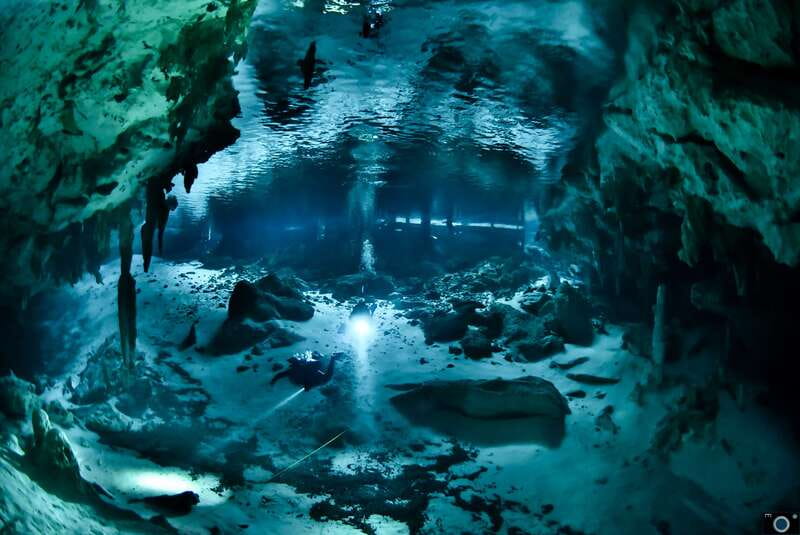
The first underwater session is your introduction to the cenote’s scale and atmosphere. You will use the provided scuba equipment, including a light and a 5 mm wetsuit. The wetsuit is useful because cenote water can feel cool during a long session, even in warm Quintana Roo weather.
The route is designed with safety in mind. You remain close to one of the exits, and the cavern has numerous air holes. You also maintain visual contact with natural light. These features do not remove the need for careful buoyancy and calm breathing, but they make this a reasonable introduction to cavern scuba for certified Open Water participants.
Your instructor should explain the route and keep the group together. With only four participants, you have a better chance of hearing instructions and getting individual help. That is one of the strongest reasons to choose this format instead of a large group outing.
Move slowly and keep your fins away from the bottom and rock formations. Cenote formations can take an extremely long time to develop, and a careless kick can damage them. Slow movement also helps you conserve air and gives you more time to notice small details in the rock.
The water’s clarity can be startling. You may see the full shape of a passage rather than just the area lit by your mask. Your light helps reveal formations in darker sections, while natural light provides a constant reference point.
More Scuba Diving in Tulum
- 2 dives in Cenote Dos ojos Certified Divers
★ 5.0 · 227 reviews - 2 cenote divings (including one deep diving) for advanced divers in Tulum
★ 5.0 · 186 reviews - 3 Cenote Dives – Casa & Dos Ojos
★ 5.0 · 118 reviews - Amazing beginner dive in Tulum cenote (or refresher dive)
★ 5.0 · 116 reviews
The 15-minute break between sessions
The break is short but useful. You have 15 minutes to come out, rest, and prepare for the second session.
Do not treat this as dead time. Your first session may leave you mentally busy, especially if this is your first cavern setting. Think about how comfortable you felt, ask questions, and tell the instructor if you need any equipment adjusted.
You should bring swimwear, and it is sensible to arrive ready to change into the provided wetsuit. The included equipment reduces the amount you need to pack, but you still need your certification and personal essentials.
Because lunch and breakfast are not included, plan ahead. The activity is not described as a meal stop, so do not count on food being provided during the break.
The second 40-minute session
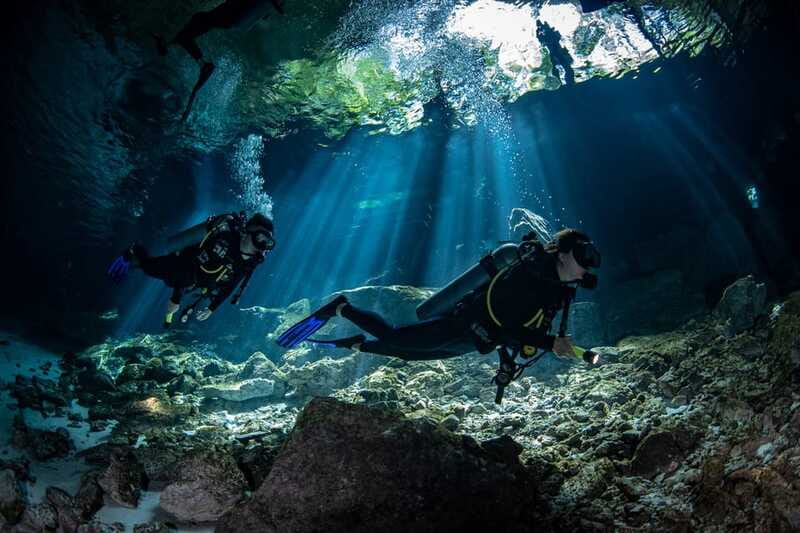
The second session gives you another 40 minutes to enjoy the cenote with a better feel for the setting. You already know how the light behaves, how your equipment feels, and how the group moves.
This is when you can focus more on the details. Look for changing textures in the limestone, formations above and below you, and the contrast between brighter areas and darker cavern sections. A halocline may also be visible, depending on the area visited and the conditions.
Cenote scuba is not a wildlife-heavy reef excursion. The appeal is the geology, clarity, silence, and sense of space. If you want colorful coral, large schools of fish, or open-sea animals, this is a different kind of underwater experience. If you enjoy unusual environments and natural formations, it offers something the Caribbean coast alone cannot provide.
After the second session, you return to La Calypso Dive Center using the included transportation. The total timing is long enough to feel substantial, but short enough to fit into a day built around other Tulum plans.
Safety and the cavern setting
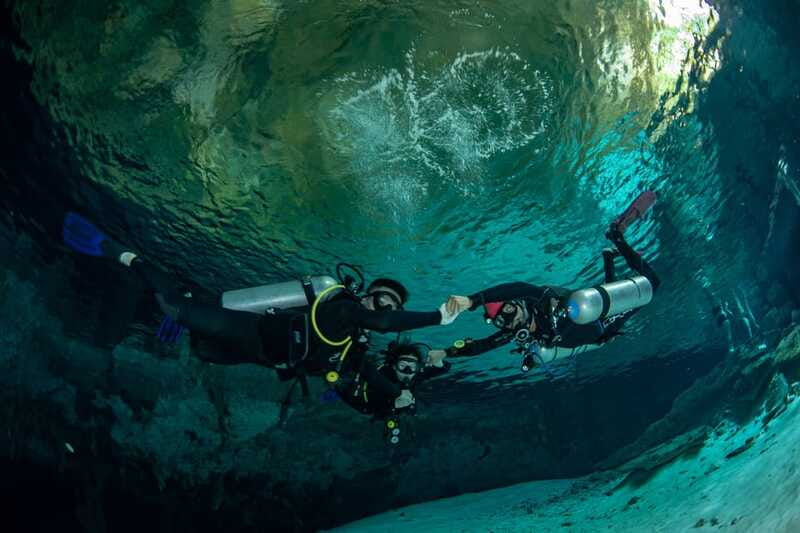
The safety setup is one of the most important parts of this outing. You remain close to an exit, have nearby air holes, and keep visual contact with daylight. The tour is presented as appropriate for Level 1 or Open Water certified scuba participants.
That does not mean you should treat it like a casual swim. You need to be comfortable using scuba equipment and following an instructor in a cavern environment. Buoyancy control matters, as does staying close to your guide and the group.
The activity is not suitable for non-swimmers, uncertified divers, pregnant women, children under 15, people over 70, or people with respiratory problems or other pre-existing medical conditions. If any of those conditions apply, this is not the right outing.
The 15 steps down to the cenote deserve attention. You must carry your tank down the stairs, so anyone with knee, balance, or mobility concerns should think carefully before booking. The steps are not a small technical note. They are part of the physical demands of the day.
What the $199 price includes
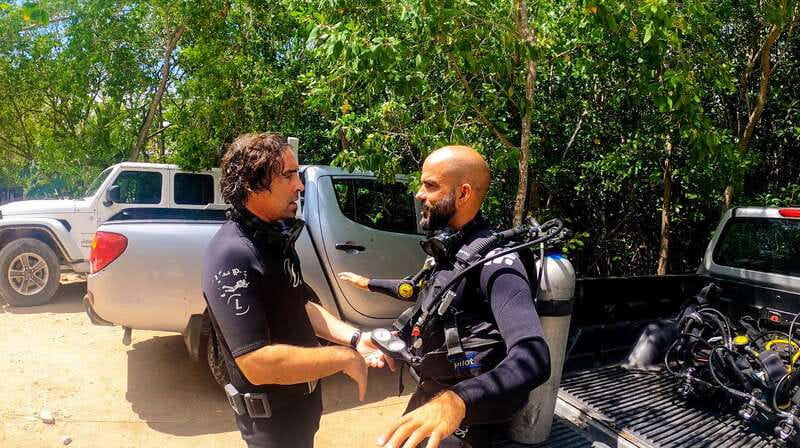
The cost is $199 per person. That is not a cheap swim, but the price covers more than entry to a cenote. You get round-trip transportation from the dive center, scuba equipment, a 5 mm wetsuit, lights, an instructor, and two 40-minute sessions.
The small group limit improves the value. With no more than four participants, the instruction should feel more personal than a large recreational group. That can be especially useful if your certification is recent or your cavern experience is limited.
You still need to pay for your own way to La Calypso Dive Center, and food is not included. Those extra costs are manageable, but they belong in your budget. The price makes the most sense if you value guided instruction, equipment, and a carefully managed cavern setting rather than simply wanting to enter a cenote.
For a certified diver, two sessions in one day provide better value than a brief single look. You get time to adjust, rest, and return to the water with more confidence.
The best fit for this experience
I would recommend this to a certified Open Water diver who wants something different from a standard ocean outing. You should enjoy unusual geology, clear water, and quiet underwater spaces more than fast action or abundant marine life.
It also suits couples and small groups who prefer focused instruction. The four-person limit is especially helpful for people who want to ask questions or need a little extra guidance.
This is less suitable if you are nervous around overhead environments, uncomfortable carrying a tank down stairs, or hoping for a relaxed snorkeling stop. The tour uses scuba equipment and requires certification. You are there for two structured underwater sessions, not a casual dip.
Photographers may find plenty to like. The clarity and formations offer strong subjects, and one participant returned with impressive images. Still, a camera does not replace good buoyancy or attention to the guide. Enjoy the views first, then work on the photographs.
Practical details that can make the day easier
Bring your diving certification and swimwear. The operator supplies the scuba equipment, lights, and 5 mm wetsuits, but you should arrive prepared to spend much of the day around water.
Wear something comfortable for the transfer and the short walk to the cenote. You will carry your tank down 15 steps, so practical footwear and steady movement matter.
Since hotel pickup is not included, confirm the route to the dive center before leaving your accommodation. The address is easy to miss if you are watching only for a large storefront, since the center is a small cabin in a tropical garden.
Cancellation is flexible up to 24 hours before the activity for a full refund. You can also reserve and pay later, which helps if your Tulum schedule is still changing. Check the available start time before committing, especially if you have other plans that day.
Should you book the Dos Ojos experience?
Book it if you are certified, comfortable with scuba, and want to see Tulum’s underground water world rather than repeat a standard reef outing. The combination of two 40-minute sessions, clear water, dramatic limestone, natural light, and a four-person group makes the $199 cost reasonable for the right person.
Think twice if you dislike confined spaces, cannot manage the stairs with a tank, or want an easy swim with no gear or certification. For everyone else, Dos Ojos offers a rare kind of underwater scenery, and the careful route design keeps the experience accessible without making it feel ordinary.
FAQ
Do I need scuba certification for this activity?
Yes. You must bring diving certification, and the experience is available to certified Level 1 or Open Water divers.
How long is the full experience?
The activity lasts about 5.5 hours, including the meeting time, transportation, preparation, two underwater sessions, and the return to La Calypso Dive Center.
How long is each scuba session?
Each session lasts about 40 minutes. There are two sessions, with a 15-minute break between them.
Is transportation included?
Round-trip transportation from La Calypso Dive Center to Dos Ojos is included. Hotel pickup and drop-off are not included.
What equipment is provided?
Scuba equipment, lights, and 5 mm wetsuits are provided. You need to bring your diving certification and swimwear.
How many people are in each group?
The group is limited to four participants.
What languages can the instructor speak?
Instruction is available in French, Spanish, and English.
Can I cancel for a full refund?
Yes. You can cancel up to 24 hours in advance for a full refund. You can also reserve now and pay later.
Newest Tulum trips we have written up
- From Riviera Maya : Tulum Ruins, Cenotes & Jungle Adventure★ 4.9 · 19 reviews
- Tulum Taco Tour★ 5.0 · 3 reviews
- Tulum: Sport Fishing Experience with Ceviche★ 4.0 · 3 reviews
- Tulum: Vegan Walking Food Tour with Tasting★ 5.0 · 8 reviews
- Tulum: Private Tour 2 Cenotes Sac Actun, the longest underground river in the world★ 5.0 · 6 reviews
- Tulum : Scuba in 2 cenotes including a deep one Pit Dos Ojos★ 4.9 · 8 reviews
- Tulum: Snorkeling at Paradise Reef★ 4.8 · 24 reviews
- Tulum: 2 spot Reef Snorkel 1 hour 30 minutes★ 4.5 · 11 reviews
Playa del Carmen Cenote Tours, compared.

Chichen Itza, Cenote and Valladolid Small Group Day Trip
Read our review →
From Playa del Carmen ATV Adventure with Ziplines, Cenote
Read our review →
Half-Day Sea Turtle and Cenote Snorkeling Tour from Cancun & Riviera Maya
Read our review →
Tulum Guided Tour, Magical Cenote, Lagoon Snorkeling and Beachside Lunch
Read our review →
Playa del Carmen Buggy Tour with Cenote Swim and Mayan Village Visit
Read our review →
Tulum Ruins, Turtles in Akumal and Cenote tour
Read our review →
Jungle Buggy Tour from Playa del Carmen Including Cenote Swim
Read our review →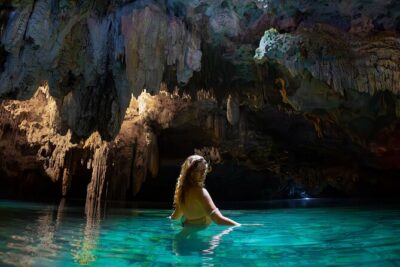
Hidden Cenote Swim: Snorkeling, Sea Turtles and Beachside Lunch
Read our review →Browse the lists this tour appears in