
Reviewed · PLAYA DEL CARMEN COOKING CLASSES
PDC Traditional Mexican Cooking Experience
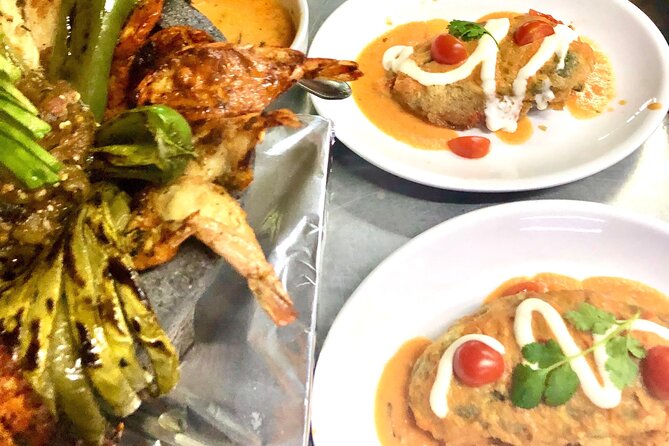
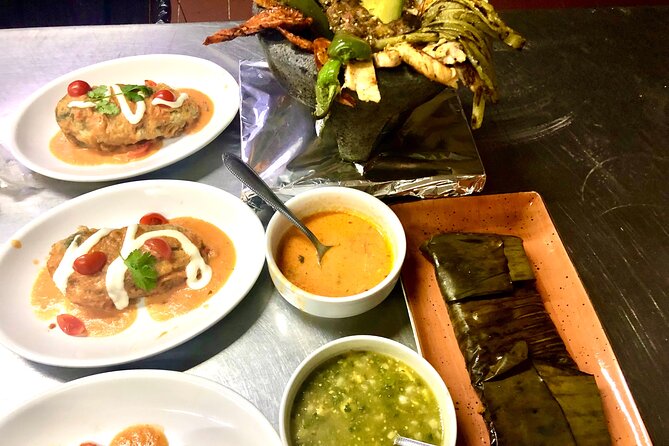
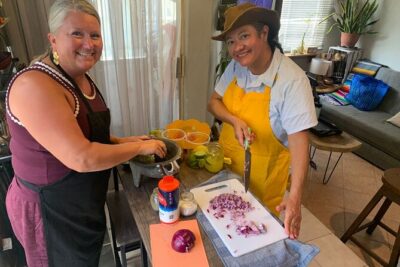
The best part of this Playa del Carmen cooking class is that you do not simply watch a chef prepare a few dishes. You help make a full Mexican meal, including tamales, chiles rellenos, and a volcanic-stone molcajete filled with seafood and meat. The small group, capped at eight, gives the class a friendly, hands-on feel.
I like the local food stories from hosts such as Panchito and Francisco, who connect the dishes with Mexican life and the history of Playa del Carmen. I also like the practical generosity of the meal: you prepare so much food that you can take leftovers with you.
The main consideration is the venue. This is not a home kitchen or a stop at a local market. You meet at Town Hall Plaza and walk five to ten minutes to a rented restaurant, where the chefs and support cooks handle safety and service.
Key points
- Tamales made from scratch: You get a closer look at the work behind a dish many visitors only encounter ready-made.
- A full Land, Sea and Sky molcajete: Prepare octopus, shrimp, flank steak, and chicken, with red snapper or lobster available for an extra charge.
- Small group of up to eight: The size suits people who want to chop, mix, grill, and ask questions rather than sit at the back of a demonstration.
- Food and culture together: The hosts explain how corn, chili peppers, regional identity, family, and care shape Mexican cooking.
- A generous three-and-a-half-hour meal: You make refreshments, starters, main dishes, and sides, with takeout available if you cannot finish.
- Downtown meeting point: Start at Playa del Carmen’s Town Hall Plaza on 20th Avenue between 8th and 10th Streets.
Why this cooking class feels different from a recipe lesson
Many cooking classes hand you measured ingredients and ask you to follow a fixed recipe. This experience aims for something broader. You learn how traditional Mexican food reflects place, family, and habit, then put that idea into practice at the stove and worktables.
Traditional Mexican cuisine is recognized by UNESCO as an Intangible Cultural Heritage of Humanity. That recognition is not just about a list of famous dishes. It reflects an ongoing food tradition built around corn, chili peppers, preparation methods, local customs, and knowledge passed between generations.
That context gives the cooking a purpose. You are not only learning how to assemble a tamale or fill a poblano pepper. You are hearing why food matters in Mexican homes and why cooking is often treated as an act of care.
The hosts place special weight on the idea that cooking shows love to the people you care about. It is a simple point, but it helps explain why this class includes several dishes rather than one neat recipe. The goal is closer to preparing a meal for family than completing a quick cooking exercise.
More Cooking Classes in Playa Del Carmen:
- Playa del Carmen Mexican Cooking Class
★ 5.0 · 306 reviews - Mexican Cooking Class 1 or 3 Courses Tequila and Mezcal Tasting
★ 5.0 · 151 reviews - Authentic Mexican Cooking Class in Playa del Carmen
★ 5.0 · 34 reviews
Meeting Panchito and walking to the kitchen
You meet at The Town Hall Plaza in downtown Playa del Carmen, on 20th Avenue between 8th and 10th Streets. After introductions, your host escorts you to the restaurant kitchen, a walk of roughly five to ten minutes.
This arrangement is worth understanding before you book. The class does not take place in a private home, and there is no market visit. The area does not have a suitable local farmer market for this activity, so the ingredients are prepared in advance.
I see that as a trade-off rather than a flaw. You miss the chance to browse produce stalls or choose ingredients yourself, but you also avoid spending part of a short class walking around while someone shops. The cooking begins quickly, which matters when the whole experience lasts three and a half hours.
The restaurant venue provides an ample kitchen, cooking tools, ingredients, chefs, and support cooks. That setup should appeal to you if clean organization and a proper work area matter more than a rustic home setting.
Panchito is the host most often associated with the experience, while Francisco and Lilia have also led or supported sessions. You can expect English or Spanish instruction. The personal conversation is an important part of the class, with time to ask about Mexican history, Playa del Carmen, food, and everyday life.
Aguas frescas and antojitos begin the meal
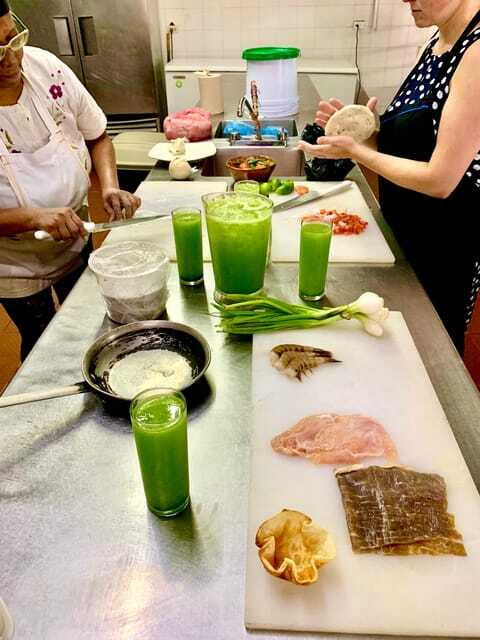
The first kitchen work includes aguas frescas, the refreshing fruit or grain-based drinks commonly served with Mexican food. You also prepare antojitos Mexicanos, small starters with roots in pre-Hispanic food traditions and later regional influences.
This opening portion gives you an easy start. You can get used to the kitchen, the tools, and the cooking rhythm before moving into the larger dishes. It also introduces a useful point about Mexican food: a meal is not always one main plate with a token side. Drinks, small bites, sauces, fillings, and accompaniments all have a role.
The exact antojitos can vary, so you should not book expecting one fixed starter every time. That flexibility is part of the experience, though it makes the class less suitable if you want a tightly specified menu in advance.
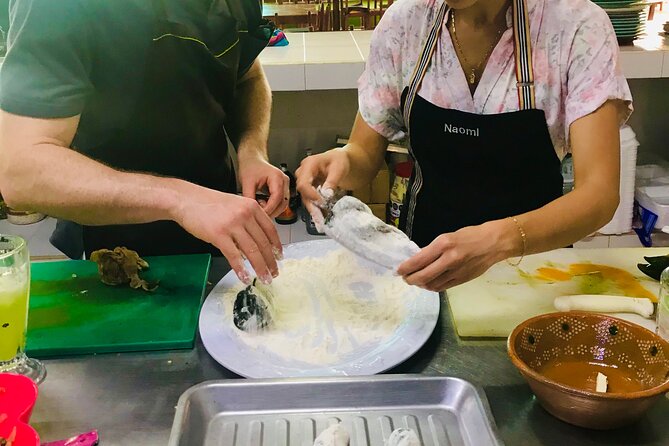
The instruction is meant to be active. You do not simply watch a demonstration from across the room. The host and cooks show you what to do, then guide you through your own preparation.
Tamales from scratch, not just a tasting
Tamales are one of the most useful dishes to make in a cooking class because the finished food hides much of the work. Once a tamale is steamed and served, it can look simple. Preparing one reveals the time, texture, wrapping, and filling involved.
The class includes tamales made from scratch. That phrase matters here because the point is not just to fold a prepared item or reheat something made earlier. You take part in the process and see how a traditional food comes together.
You should allow room for the tamale lesson to challenge your assumptions. The result may be quite different from the dense, heavily filled tamales you have tried elsewhere. One participant found the class changed their entire idea of what a tamale could be, which tells you that this part is more than a quick demonstration.
The tamales also show why Mexican cooking is not always fast. Some foods are valued because of the care built into their preparation. If you prefer a short class that produces one dinner in under two hours, this may feel long. If you enjoy learning the method behind a familiar food, the extra time is well used.
A different kind of day out along the same coast:
- From Playa del Carmen ATV Adventure with Ziplines, Cenote
★ 5.0 · 2,041 reviews - Half-Day Sea Turtle and Cenote Snorkeling Tour from Cancun & Riviera Maya
★ 5.0 · 2,039 reviews - VIP Chichen Itza Private Tour
★ 5.0 · 1,782 reviews - Playa del Carmen Buggy Tour with Cenote Swim and Mayan Village Visit
★ 5.0 · 1,747 reviews
Chiles rellenos and regional flavor
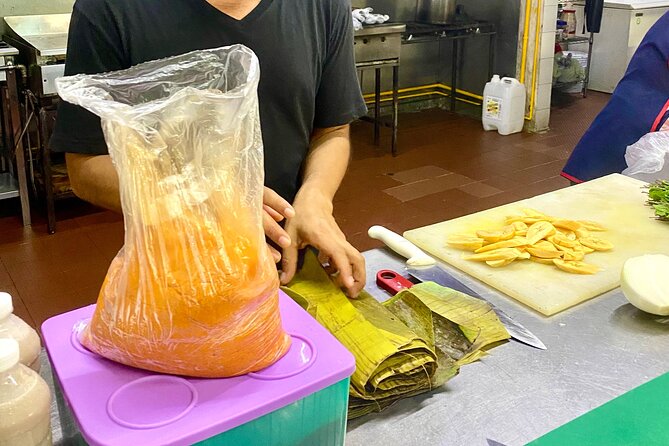
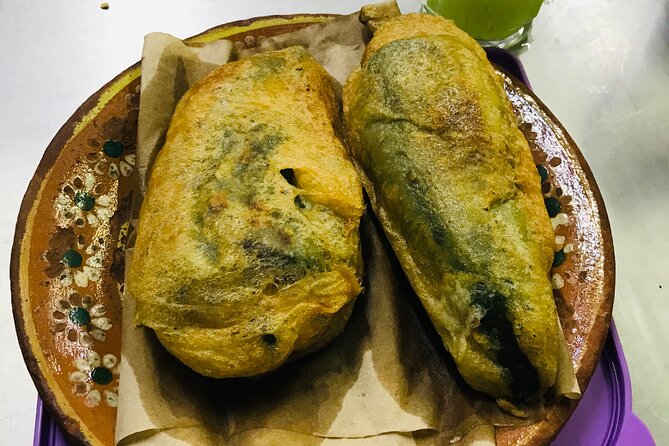
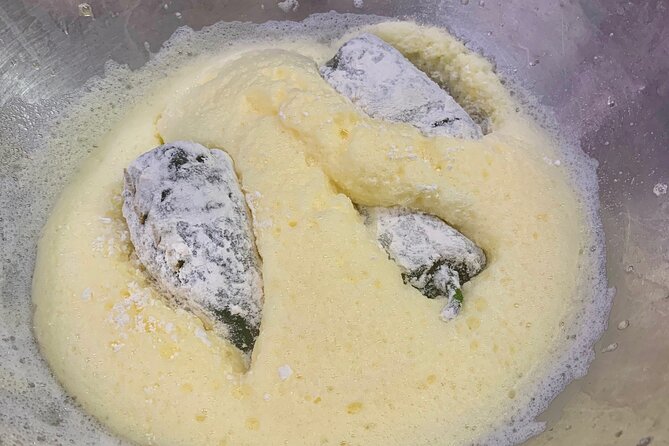
Chiles rellenos are another main dish prepared during the class. The name means stuffed chiles, but the character of the dish can vary depending on the filling, sauce, and preparation style.
The class uses traditional dishes that may change from one session to another. Along with chiles rellenos, possible main courses include pipián and mole. These are not interchangeable sauces in the cultural sense. Each reflects different combinations of chili peppers, seeds, spices, texture, and regional practice.
That changing menu gives the class a more natural feel. Mexican cuisine is not one single national recipe book. The country contains many food regions, and ingredients take on different identities from one area to the next.
You should ask your host what is being prepared when you arrive if a particular dish matters to you. The supplied information confirms that menus can vary, so you should treat the named dishes as examples rather than guarantees.
The dramatic molcajete feast
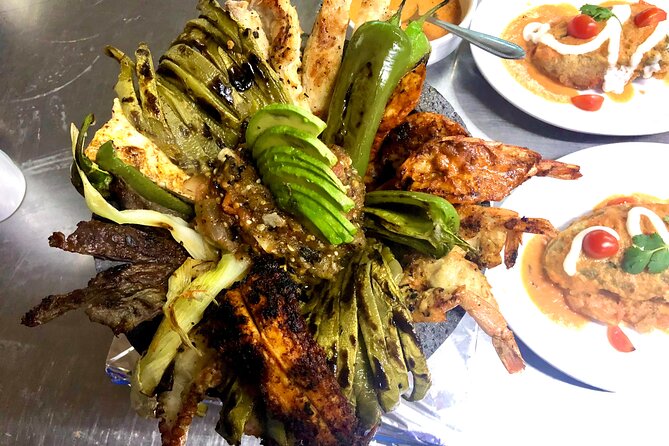
For seafood lovers, the most memorable portion may be the Cielo, Mar y Tierra Molcajete, described in English as a Land, Sea and Sky molcajete. The dish uses a volcanic-rock mortar and combines octopus, shrimp, flank steak, and chicken.
The presentation has a little theater. A fire display is used with the traditional mortar, which is then filled with grilled vegetables, seafood, and meat. You prepare the components and bring them together with guacamole and side dishes.
This is a substantial amount of food. The mixture of octopus, shrimp, beef, and chicken makes the dish especially useful for people in a group with different tastes. It also gives you a chance to compare cooking methods and textures in one meal.
Red snapper or lobster can be chosen for an added charge. That option is worth considering only if you particularly want the upgrade. The standard combination already includes seafood, meat, poultry, and vegetables, so the extra cost is not necessary for a complete experience.
The molcajete is also where the class becomes less like a standard recipe workshop. You are working with a traditional serving and grinding vessel, not just a modern pan. The volcanic stone connects the food to older preparation methods while the ingredients create a large, contemporary feast.
What you actually eat and take home
The menu can include refreshments, antojitos, tamales, chiles rellenos, a molcajete main course, and side dishes. That is a lot for one sitting, especially after three and a half hours of cooking.
The class includes beverages and refreshments. The dishes may be accompanied by Mexican wine from a selected winery or another drink chosen from the available options. Since the drink selection can vary, do not assume a particular wine will be served.
The useful detail is the takeout option. If you cannot finish everything, you can take your cooked and prepared dishes with you. Several dishes are made in generous portions, and you may have enough for another meal.
Bring a practical attitude toward leftovers. You are not signing up for a tiny tasting menu. The cooking itself is the focus, but the amount of food adds real value to the price and can turn the class into lunch plus a later meal.
The hosts make the difference
The strongest part of this experience is the human exchange. Panchito is described as warm, punctual, and easy to talk with, while Francisco has been praised for explaining both Mexican food and the history of Playa del Carmen during the walk to the kitchen.
That matters because a cooking class can be technically sound yet forgettable if the instructor only calls out instructions. Here, the conversation covers food, Mexico, local life, beliefs, and personal stories.
You should expect a guided discussion rather than a formal lecture. The experience is conducted in English or Spanish, and the small group allows more room for questions. If you want to ask why a dish is prepared a certain way, or how regional identities affect Mexican food, this format gives you a good chance to do so.
The support cooks also matter. There is plenty of cooking involved, and having chefs and assistants in the kitchen helps keep the class moving. It also means the host can spend more time explaining and helping rather than managing every task alone.
Is $116 a fair price?
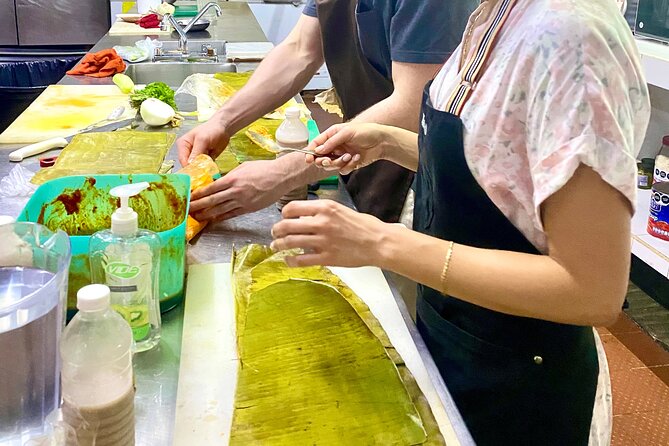
At $116 per person, this is not the cheapest way to eat in Playa del Carmen. You could buy several restaurant meals for that amount. The value comes from the amount of food, the instruction, the small group, the drinks, and the cultural conversation.
You are also paying for a full kitchen experience rather than a single recipe. The class includes ingredients, tools, a host, chefs, support cooks, refreshments, and the possibility of taking leftovers away.
I think the price makes the most sense if you value participation. If you only want to taste traditional Mexican food, a restaurant will cost less and require less time. If you want to understand how the dishes are made and leave with techniques you can use later, the cost is easier to justify.
The small group helps protect that value. With no more than eight participants, you are less likely to feel like an audience member. Still, the exact amount of personal instruction can depend on the group and the dishes being prepared.
Who should book this experience?
I would choose this class if you enjoy food with a story behind it, want a substantial meal, and prefer doing the work yourself. It also suits couples, friends, and families who like sharing tasks and eating together.
It is a strong fit for you if you have already taken basic cooking classes and want something less mechanical. One participant specifically preferred the open conversation and cultural approach to a simple follow-the-recipe format.
You may want to reconsider if you need a fixed menu, a market visit, or a private home setting. You should also be comfortable with a mixed menu that can include seafood, chicken, beef, and chili-based dishes. Red snapper and lobster are optional, but the standard molcajete already includes octopus and shrimp.
The class is also a good choice for people who want a slower food experience during a Playa del Carmen stay. It takes three and a half hours, so plan it as a major part of your day rather than a quick activity squeezed between other bookings.
Practical details before you reserve
Meet at The Town Hall Plaza in downtown Playa del Carmen, on 20th Avenue between 8th and 10th Streets. From there, you walk five to ten minutes to the restaurant venue.
The class is offered in English and Spanish. It is limited to eight participants, and the duration is three and a half hours. Starting times vary, so check availability for your date.
All cooking ingredients, tools, cooking materials, refreshments, and beverages are included. You can cancel up to 24 hours in advance for a full refund, and the reserve-now, pay-later option allows you to hold a place without paying immediately.
If you are deciding between this and a standard food tour, remember the difference. A food tour lets you sample what other people have cooked. This experience asks you to prepare a substantial meal, hear the stories behind it, and carry some of the result with you.
Should you book the PDC Traditional Mexican Cooking Experience?
Book it if you want a hands-on class with a full menu, local hosts, and plenty of conversation. The tamales, chiles rellenos, and Land, Sea and Sky molcajete give you more than one cooking lesson, while the small group keeps the atmosphere personal.
Skip it if you are mainly seeking a market visit, a home-cooked setting, or a short tasting. The rented restaurant is practical rather than intimate, and the menu can change.
For most food-minded visitors, the combination of instruction, culture, generous portions, and takeout makes the $116 worthwhile. You are not just leaving with a recipe. You are leaving with a better sense of why Mexican cooking is tied so closely to family, regional identity, and care.
FAQ
Where does the cooking experience begin?
You meet at The Town Hall Plaza on 20th Avenue between 8th and 10th Streets in downtown Playa del Carmen. After introductions, you walk about five to ten minutes to the restaurant kitchen.
How long does the experience last?
The cooking experience lasts three and a half hours.
How many people can join the class?
The group is limited to eight participants.
Which languages are available?
Instruction is available in English and Spanish.
What food will I prepare?
The menu begins with aguas frescas and antojitos Mexicanos. Main dishes may include tamales, chiles rellenos, pipián, mole, or a Cielo, Mar y Tierra molcajete with octopus, shrimp, flank steak, and chicken. The exact dishes can vary.
Are ingredients, drinks, and cooking tools included?
Yes. Ingredients, cooking tools and materials, refreshments, and beverages are included. Red snapper or lobster may be available for an additional charge, depending on your choice.
Newest Playa Del Carmen trips we have written up
- Tulum Plus tour de un dia con visita a cenote y Ahau★ 3.8 · 12 reviews
- Tulum Classic: history and culture with cenote★ 3.8 · 17 reviews
- Private Tour Punta Laguna Monkey Sanctuary Zip Line★ 5.0 · 7 reviews
- Private Half Day Tulum Ruins, Cave, Wood Sculpture with Lunch★ 4.5 · 6 reviews
- Private Transfer from Playa del Carmen to Tulum★ 3.5 · 3 reviews
- Half-Day Yucatan’s Instagram Cenotes PRIVATE TOUR★ 4.5 · 12 reviews
- Private Yucatan Highlights Tour★ 5.0 · 12 reviews
- Private Yucatan Discovery Tour★ 5.0 · 15 reviews
Playa del Carmen Cooking Classes, compared.
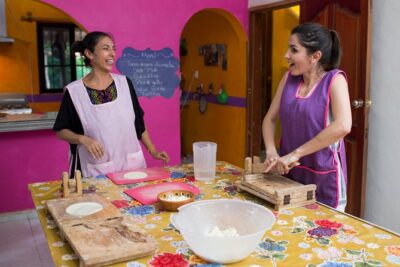
Mexican Cooking from Scratch in a Local Home in Tulum
Read our review →
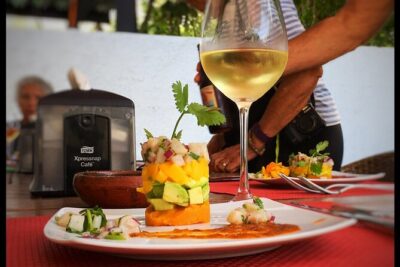
Mexican Cooking Class 1 or 3 Courses Tequila and Mezcal Tasting
Read our review →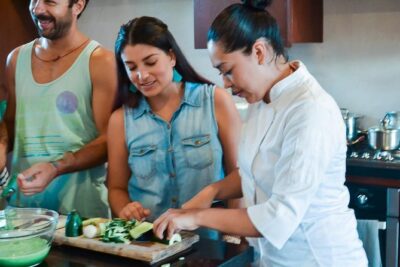
Authentic Mexican Cooking Class in Playa del Carmen
Read our review →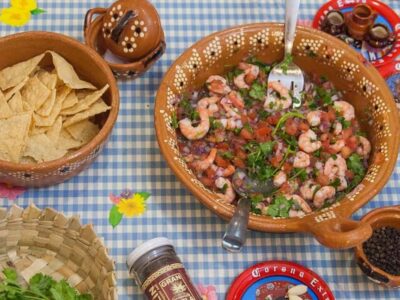
Cooking Class in Playa del Carmen: 9 Recipes & Bottomless Drinks
Read our review →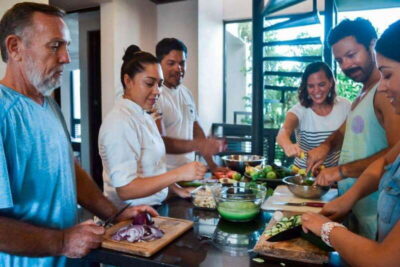
Playa del Carmen: Isa’s Authentic Mexican Cooking Class
Read our review →Browse the lists this tour appears in