
Reviewed · PLAYA DEL CARMEN CENOTE TOURS
Cenotes diving Dos Ojos and The Bat Cave
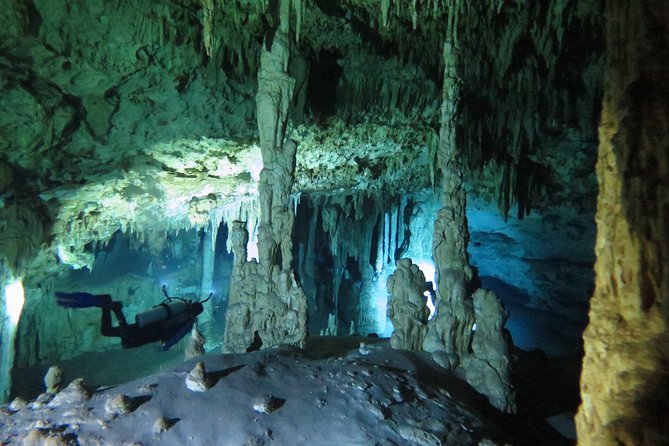
Dos Ojos gives you two cave worlds in one visit: the bright, open Barbie Line and the shadowy Bat Cave Line, where you rise toward an air-filled chamber and its flying bats. The water is famously clear, and the routes are shallow enough for certified beginners who feel comfortable in an overhead cave setting.
I like the private group format, since your family or friends can have their own instructor rather than being folded into a large crowd. I also like the contrast between the two routes, plus the pause for snacks and rest between them. The main consideration is simple: certification is required, equipment costs extra, and cave diving is not the same as an ordinary open-water swim.
Key points
- Two distinct cenote routes: The Barbie Line is bright and spacious, while the Bat Cave Line feels darker and more enclosed.
- Private instruction: Your group receives its own professional, multilingual guide.
- Clear, shallow water: A good setting for certified beginners, subject to the required health check.
- Snorkeling option: Non-divers can enjoy the cenote without taking part in the scuba descents.
- Playa del Carmen pickup: Hotel pickup is included from central Playa del Carmen and Playacar.
- $210 value: The price covers two tanks, weights, fees, snacks, and transport, but not equipment rental or optional insurance.
Two cenotes, two very different moods
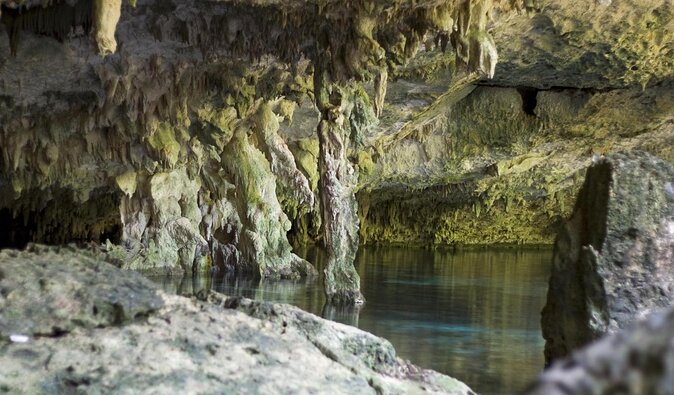
The appeal of this outing is not simply seeing an underground waterway. It is the sharp change in atmosphere between the two Dos Ojos routes.
Dos Ojos means two eyes. The name comes from two nearby caverns linked by a common area. Both routes begin and finish in the same general place, yet they show you very different sides of the cenote.
The Barbie Line is the more open and illuminated route. Light reaches into the water, giving you a clear view of huge stalactites, stalagmites, and stone columns. You have more room around the formations, so this part feels less like squeezing through a cave and more like moving through a vast natural gallery.
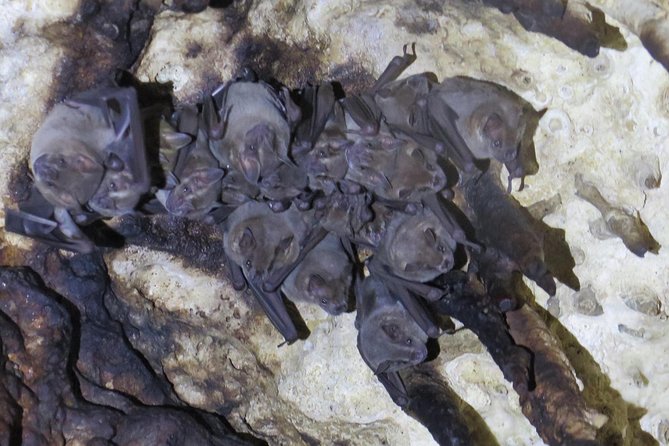
The Bat Cave Line changes the mood. Some sections have very little light, with tunnels and rooms that feel enclosed and cave-like. The route leads around an air-filled chamber, where you ascend to see bats and the formations above the water.
That contrast gives the outing its shape. The first route helps you appreciate the scale and clarity of the cenote. The second adds darkness, tight spaces, and the odd thrill of looking up toward a living cave chamber.
More Scuba Diving in Playa del Carmen:
- Scuba Diving in Cenote Dos Ojos from Playa del Carmen
★ 5.0 · 453 reviews - Scuba Diving in Cenote Kukulkan from Playa del Carmen
★ 5.0 · 370 reviews - Cenote Cavern Tour and Swim with Sea Turtles in Akumal
★ 4.5 · 256 reviews
What the two underwater routes require
You need an Open Water Diver certification from PADI or an equivalent agency. The operator also requires proof of certification from anyone taking part in a certified underwater descent.
The cenotes are described as suitable for beginner-level certified divers, but that does not mean the setting feels like a standard swimming pool. You are entering a cave system, and some sections have low light and tunnels. If you are newly certified, out of practice, or uneasy in confined spaces, tell the instructor before entering the water.
The professional guide gives a briefing before the activity. The available feedback places strong emphasis on safety, preparation, and calm instruction. Elana is specifically noted for her patient approach during refresher instruction, while Patrick and Dima are part of the wider Diversland Mexico team associated with cave and cenote activities. Ana handles logistics and planning for the company.
The practical lesson is to use the briefing well. Ask about the route, light levels, hand signals, and how the group will move through the darker sections. A private instructor makes those questions easier to address because the pace can be matched more closely to your group.
The Barbie Line: bright water and giant formations
The Barbie Line is the easier place to settle into the cenote experience. The water is highly clear, and the route has plenty of natural light. That matters because you can see the rock formations without relying only on a torch or guide light.
The large stalactites and stalagmites are the main attraction. Some formations hang from the ceiling, others rise from the floor, and columns join the two. Their shapes reflect the slow work of mineral-rich water over very long periods.
I like this section for first-time cenote visitors because it lets you understand the setting before the route becomes darker. You can focus on buoyancy, visibility, and the unusual sensation of moving through fresh water beneath a limestone ceiling.
The open feel also makes the Barbie Line a useful contrast with the Bat Cave Line. If you only visit one route, you miss half of what makes Dos Ojos interesting. The two sections are close together, but they offer different visual and emotional experiences.
The Bat Cave Line: darkness, tunnels, and bats
The Bat Cave Line is the more atmospheric part of the outing. Low light and multiple rooms make it feel closer to a traditional cave than the brighter Barbie Line.
You pass through tunnels and darker sections before reaching the air-filled bat chamber. The route includes an ascent where you can see bats and the cave decorations around them. This is the point where the excursion shifts from a clear-water nature visit to a proper cave experience.
The darkness can be exciting, but it may also test your comfort level. If you dislike enclosed spaces or find low visibility stressful, this is the section to discuss with your instructor before the tour begins. The listing describes both routes as appropriate for certified beginners, but your own comfort and health still matter.
The Bat Cave Line is also where a private group has the greatest practical value. Your instructor can explain what is coming, keep the group together, and give extra attention to anyone who needs a slower pace or a moment to get comfortable.
More Cenote Tours in Playa del Carmen:
- From Playa del Carmen ATV Adventure with Ziplines, Cenote
★ 5.0 · 2,041 reviews - Half-Day Sea Turtle and Cenote Snorkeling Tour from Cancun & Riviera Maya
★ 5.0 · 2,039 reviews - Playa del Carmen Buggy Tour with Cenote Swim and Mayan Village Visit
★ 5.0 · 1,747 reviews - Jungle Buggy Tour from Playa del Carmen Including Cenote Swim
★ 5.0 · 1,253 reviews
A five-hour schedule from Playa del Carmen
The activity begins at 8:00 am and lasts about five hours. Hotel pickup is offered in central Playa del Carmen and Playacar. The stated meeting point is Plaza Palmeiras on Calle 11 Sur in the Ejidal area, and the activity ends back at the meeting point.
Because the details list both hotel pickup and a meeting-point ending, confirm your exact pickup arrangement when the booking is confirmed. The operator says confirmation arrives within 48 hours, subject to availability. A minimum of two people is needed to book.
Once at the cenotes, you receive equipment, a briefing, and the plan for the two routes. You have two tanks, weights, and a belt included. There is time to rest and eat snacks between descents, which is welcome in a morning built around physical activity and concentrated attention.
Bottled water and snacks are supplied. Still, you should arrive ready for an active half-day, with any personal items you need before entering the water. The schedule is not designed as a long sightseeing day with many unrelated stops. Its focus is the two cenote routes.
What the $210 price includes
At $210 per person, this is not the cheapest cenote outing around Playa del Carmen. The value depends on what you need.
The price includes:
- Hotel pickup from central Playa del Carmen and Playacar
- A private group
- Two tanks
- Weights and a belt
- Two underwater descents in two cenotes
- A professional multilingual guide
- Bottled water and snacks
- All fees and taxes
Equipment rental is not included and costs $15 per day. Optional diving insurance is also separate.
For a certified diver who needs a regulator, buoyancy device, or other rental gear, the final cost will be higher than the advertised rate. Check exactly what your rental package covers before booking. If you already have the needed equipment, the base price is easier to assess.
The private format is the biggest value point. You are not paying only for access to the water. You are also paying for transport, two tanks, a guide, instruction, fees, and a group that consists only of your own party. For a family or small group with mixed confidence levels, that can be more useful than a lower-priced shared outing.
Snorkeling for non-divers
You do not have to be a certified diver to enjoy the cenote setting. Snorkeling is available for people who do not take part in the certified descents.
This makes the excursion workable for a mixed group, although you should confirm how the snorkeling portion fits into the schedule when booking. The supplied details do not specify whether snorkel equipment is included, so ask before you go.
Snorkeling will let you see the clear water and some of the formations near the surface. It will not provide the same route or access as the certified underwater experience, especially in the darker tunnel sections. Still, it gives non-divers a way to share the day rather than sit out entirely.
Health, age, and flight rules
The minimum age for cenote diving is 15. Every participant must complete a health questionnaire before entering the water.
Some medical conditions, including asthma and heart problems, may prevent participation. If you have a pre-existing condition or any doubt about your fitness, consult your doctor before booking. The operator says most people can participate, but that is not a substitute for individual medical advice.
You should not plan this activity within 24 hours of flying. That rule matters when arranging an airport departure or a flight home. Leave enough space between the final underwater descent and your flight rather than trying to fit the cenotes into the last available morning.
Proof of certification is required. Bring evidence of your Open Water Diver qualification or equivalent certification, since having past experience alone may not be enough at check-in.
What the staff style means for your day
The strongest theme in the available feedback is careful organization and safety. Pickup timing, equipment quality, briefings, and patient instruction are all important here because a cave setting leaves less room for confusion.
Patrick is associated with the Diversland Mexico team, while Ana is involved with logistics and planning and Dima is known for a humorous approach alongside strong cave knowledge. Elana is specifically described as patient during refresher training. Staff assignments can change, so do not assume one particular person will lead your group, but the names help you understand the range of people connected with the operation.
The multilingual guide is useful for groups with different language needs. More important than a polished presentation is the chance to ask clear questions and receive instructions you understand before entering the water.
The private format also helps if one person in your group is less experienced. You can discuss comfort levels before the first route, rather than trying to explain everything while sharing an instructor with strangers.
Who should book this experience?
I would choose this outing if you are already certified, want to see two very different cenote environments, and value a private group. It is especially suitable for a small family or group of friends who want their own instructor and a fairly focused morning.
It also works for a mixed group because snorkeling is offered. However, non-divers should understand that they are not getting the full two-route experience.
This is less suitable if you want a casual swim, dislike dark enclosed spaces, or do not have certification. It is also a poor fit for anyone flying within 24 hours, anyone who cannot pass the health screening, or anyone looking for a tour where all equipment is included in the headline rate.
The five-hour duration is practical. You get the two cenote routes without giving up an entire day in Playa del Carmen. Pickup, snacks, tanks, and fees reduce the number of details you must arrange yourself, but equipment rental and insurance need separate attention.
Should you book Dos Ojos and the Bat Cave?
Book it if you want the clearest possible introduction to two contrasting cenote routes and prefer private instruction. The Barbie Line offers light, space, and dramatic formations. The Bat Cave Line adds darker tunnels, an air-filled chamber, and bats. Together, they give you a much fuller picture of Dos Ojos than a single short swim.
Before paying, confirm your pickup time, check the $15 equipment charge, bring certification proof, and leave at least 24 hours before any flight. If you are certified, medically fit, and comfortable with low-light cave settings, the $210 price is reasonable for the private format and included transport. If you only want a relaxed swim, choose snorkeling instead or consider a simpler cenote visit.
FAQ
Where does the tour start?
The stated meeting point is Plaza Palmeiras, Calle 11 Sur, Ejidal, 77712 Playa del Carmen, Quintana Roo, Mexico. Hotel pickup is offered from central Playa del Carmen and Playacar.
What time does the activity begin?
The start time is 8:00 am.
How long does the experience last?
The experience lasts approximately five hours.
Is scuba certification required?
Yes. Anyone taking part in a certified underwater descent must show Open Water Diver certification from PADI or an equivalent agency.
Can non-divers join?
Yes. Snorkeling in the cenote is offered for people who do not take part in the certified underwater activity.
What is included in the price?
The price includes two tanks, weights and a belt, a professional multilingual guide, two cenote descents, a private group, hotel pickup in central Playa del Carmen and Playacar, bottled water, snacks, and all fees and taxes.
Is rental equipment included?
No. Equipment rental costs $15 per day. Optional diving insurance is also not included.
Can I cancel for a full refund?
Yes. You can cancel at least 24 hours before the local start time for a full refund. Cancellations or changes made less than 24 hours before the start time are not accepted for a refund.
Newest Playa del Carmen trips we have written up
- Tulum Plus tour de un dia con visita a cenote y Ahau★ 3.8 · 12 reviews
- Tulum Classic: history and culture with cenote★ 3.8 · 17 reviews
- Private Tour Punta Laguna Monkey Sanctuary Zip Line★ 5.0 · 7 reviews
- Private Half Day Tulum Ruins, Cave, Wood Sculpture with Lunch★ 4.5 · 6 reviews
- Private Transfer from Playa del Carmen to Tulum★ 3.5 · 3 reviews
- Half-Day Yucatan’s Instagram Cenotes PRIVATE TOUR★ 4.5 · 12 reviews
- Private Yucatan Highlights Tour★ 5.0 · 12 reviews
- Private Yucatan Discovery Tour★ 5.0 · 15 reviews
Playa del Carmen Cenote Tours, compared.

Chichen Itza, Cenote and Valladolid Small Group Day Trip
Read our review →
From Playa del Carmen ATV Adventure with Ziplines, Cenote
Read our review →
Half-Day Sea Turtle and Cenote Snorkeling Tour from Cancun & Riviera Maya
Read our review →
Tulum Guided Tour, Magical Cenote, Lagoon Snorkeling and Beachside Lunch
Read our review →
Playa del Carmen Buggy Tour with Cenote Swim and Mayan Village Visit
Read our review →
Tulum Ruins, Turtles in Akumal and Cenote tour
Read our review →
Jungle Buggy Tour from Playa del Carmen Including Cenote Swim
Read our review →
Hidden Cenote Swim: Snorkeling, Sea Turtles and Beachside Lunch
Read our review →Browse the lists this tour appears in